

[Aug 30, 2025] Ultimate DP-700 Guide to Prepare Free Latest Microsoft Practice Tests Dumps
Get Top-Rated Microsoft DP-700 Exam Dumps Now
NEW QUESTION # 35
HOTSPOT
You have a Fabric workspace that contains a warehouse named Warehouse1. Warehouse1 contains the following tables and columns.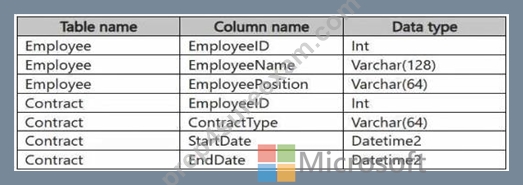
You need to denormalize the tables and include the ContractType and StartDate columns in the Employee table. The solution must meet the following requirements:
Ensure that the StartDate column is of the date data type.
Ensure that all the rows from the Employee table are preserved and include any matching rows from the Contract table.
Ensure that the result set displays the total number of employees per contract type for all the contract types that have more than two employees.
How should you complete the statement? To answer, select the appropriate options in the answer area.
NOTE: Each correct selection is worth one point.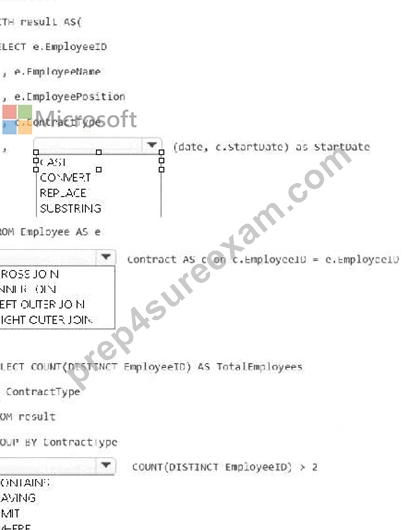
Answer:
Explanation: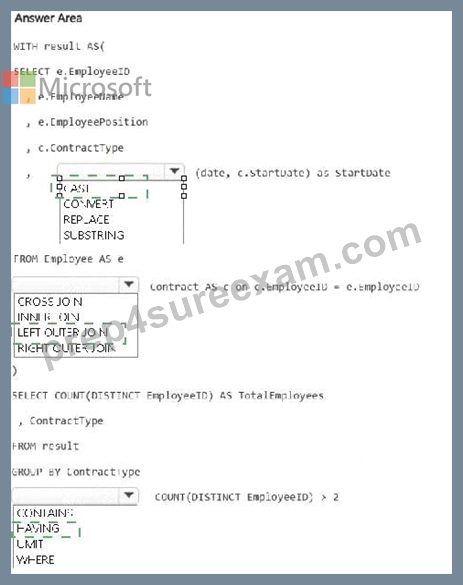
Explanation: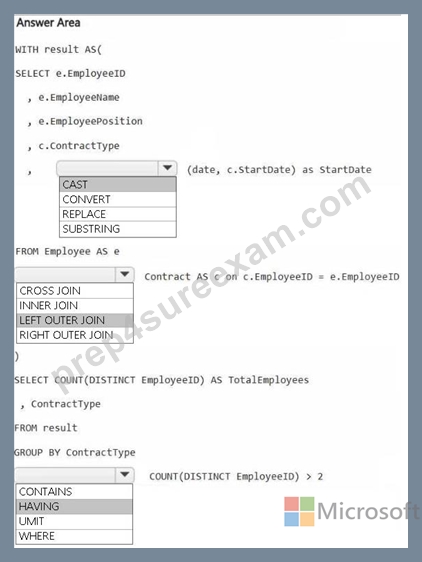
NEW QUESTION # 36
HOTSPOT
You have a Fabric workspace that contains a warehouse named Warehouse1. Warehouse1 contains the following tables and columns.
You need to denormalize the tables and include the ContractType and StartDate columns in the Employee table. The solution must meet the following requirements:
Ensure that the StartDate column is of the date data type.
Ensure that all the rows from the Employee table are preserved and include any matching rows from the Contract table.
Ensure that the result set displays the total number of employees per contract type for all the contract types that have more than two employees.
How should you complete the statement? To answer, select the appropriate options in the answer area.
NOTE: Each correct selection is worth one point.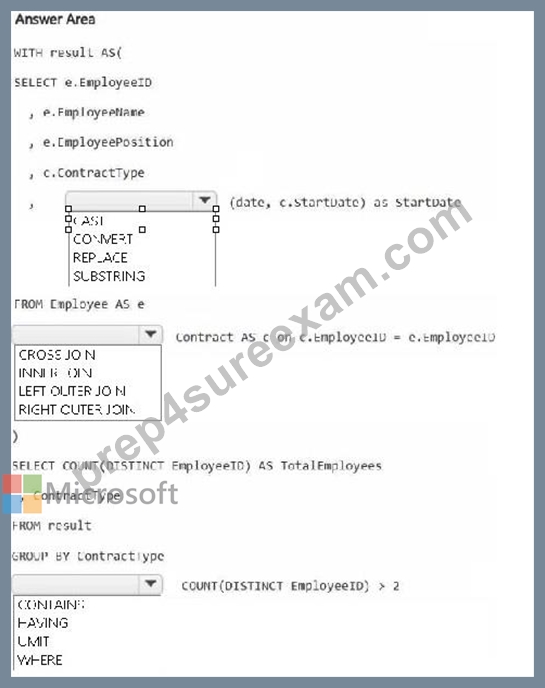
Answer:
Explanation: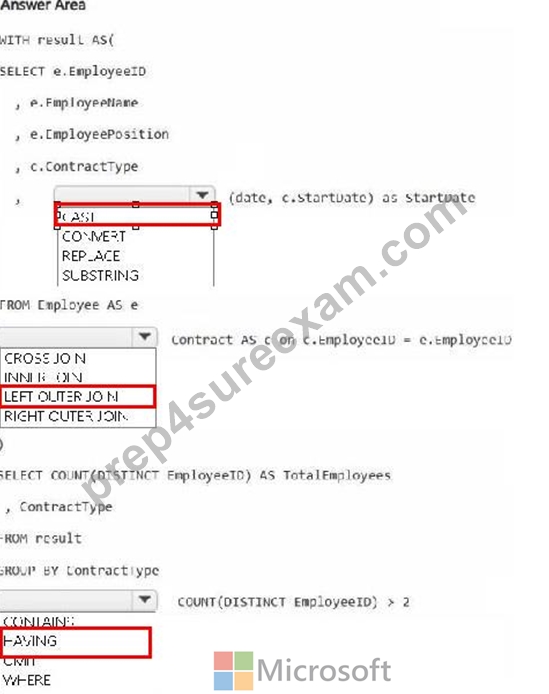
NEW QUESTION # 37
You need to create the product dimension.
How should you complete the Apache Spark SQL code? To answer, select the appropriate options in the answer area.
NOTE: Each correct selection is worth one point.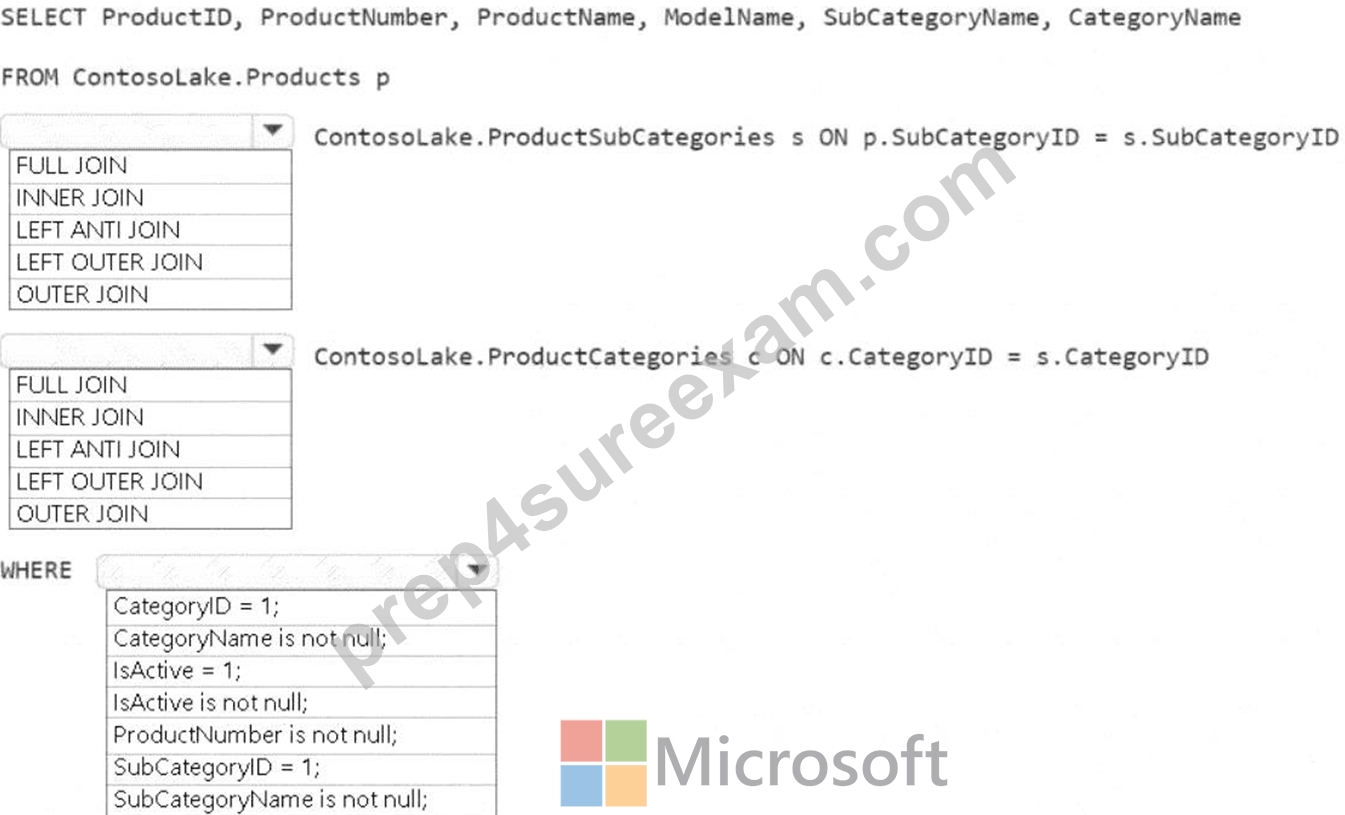
Answer:
Explanation: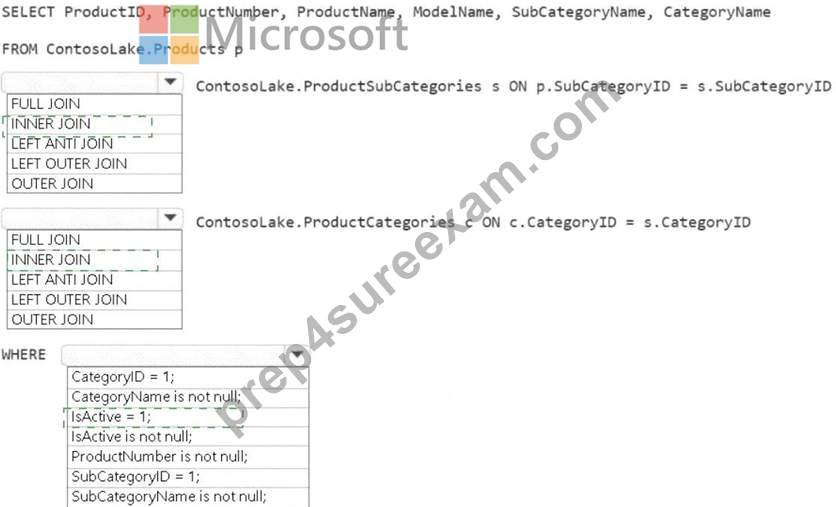
Explanation:
A screenshot of a computer Description automatically generated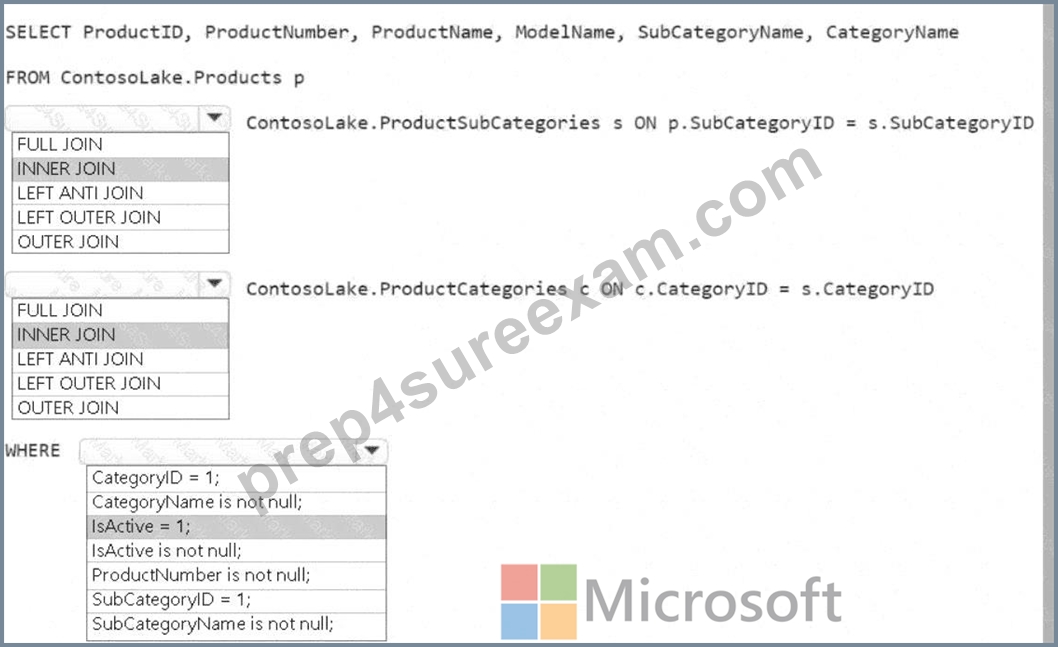
Join between Products and ProductSubCategories:
Use an INNER JOIN.
The goal is to include only products that are assigned to a subcategory. An INNER JOIN ensures that only matching records (i.e., products with a valid subcategory) are included.
Join between ProductSubCategories and ProductCategories:
Use an INNER JOIN.
Similar to the above logic, we want to include only subcategories assigned to a valid product category. An INNER JOIN ensures this condition is met.
WHERE Clause
Condition: IsActive = 1
Only active products (where IsActive equals 1) should be included in the gold layer. This filters out inactive products.
NEW QUESTION # 38
You need to ensure that processes for the bronze and silver layers run in isolation How should you configure the Apache Spark settings?
- A. Modify the number of executors.
- B. Set the default environment.
- C. Create a custom pool.
- D. Disable high concurrency.
Answer: C
NEW QUESTION # 39
You need to recommend a Fabric streaming solution that will use the sources shown in the following table.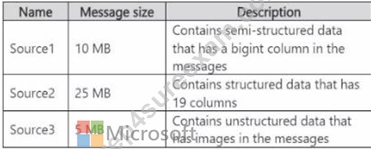
The solution must minimize development effort.
What should you include in the recommendation for each source? To answer, select the appropriate options in the answer area.
NOTE: Each correct selection is worth one point.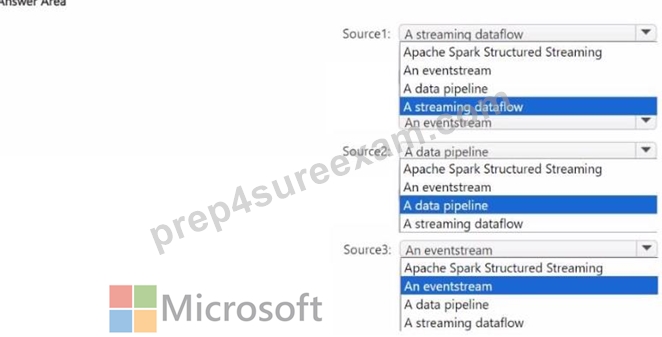
Answer:
Explanation: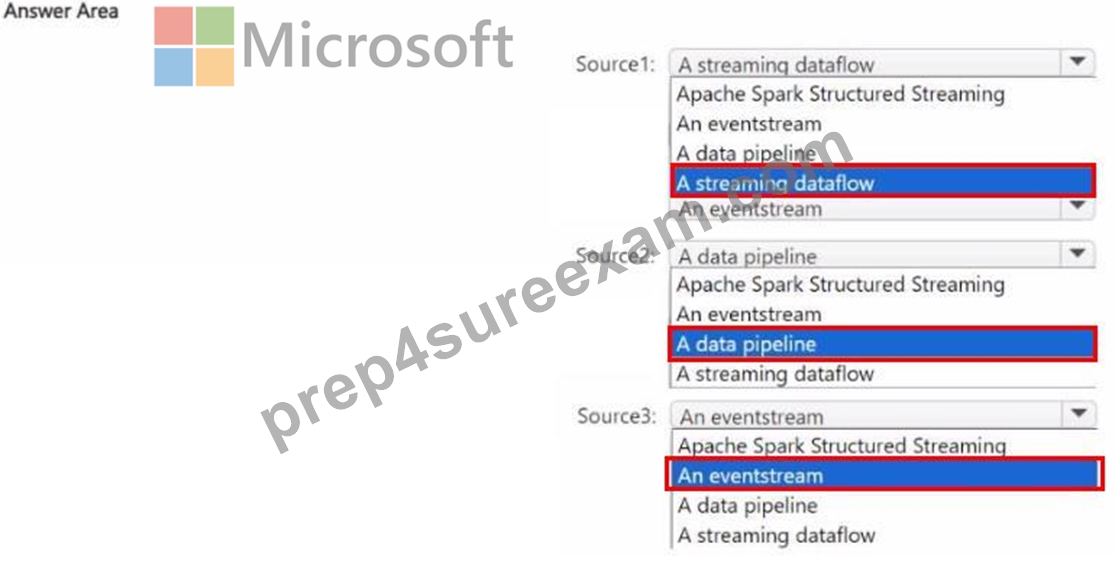
NEW QUESTION # 40
You need to create a workflow for the new book cover images.
Which two components should you include in the workflow? Each correct answer presents part of the solution.
NOTE: Each correct selection is worth one point.
- A. an activator item
- B. a data pipeline
- C. a streaming dataflow
- D. a blob storage action
- E. a time-based schedule
- F. a notebook that uses Apache Spark Structured Streaming
Answer: C,D
NEW QUESTION # 41
You have a KQL database that contains a table named Readings.
You need to build a KQL query to compare the Meter-Reading value of each row to the previous row base on the ilmestamp value A sample of the expected output is shown in the following table.
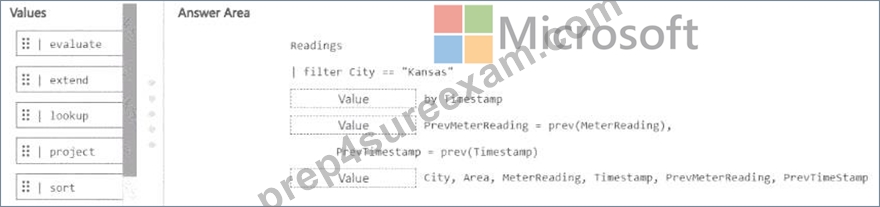
Answer:
Explanation: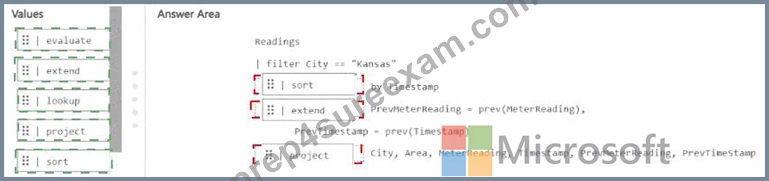
Explanation: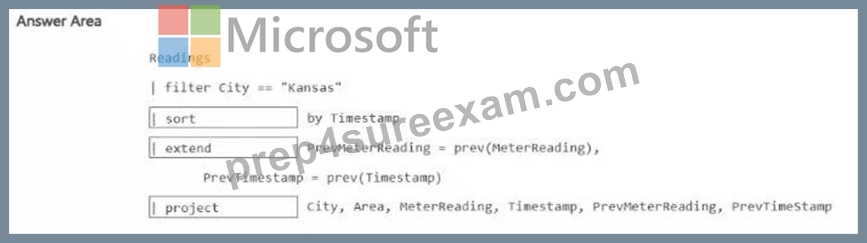
NEW QUESTION # 42
You have a Fabric warehouse named DW1 that loads data by using a data pipeline named Pipeline1. Pipeline1 uses a Copy data activity with a dynamic SQL source. Pipeline1 is scheduled to run every 15 minutes.
You discover that Pipeline1 keeps failing.
You need to identify which SQL query was executed when the pipeline failed.
What should you do?
- A. From Real-time hub, select Fabric events, and then review the details of Microsoft.Fabric.ItemReadFailed.
- B. From Monitoring hub, select the latest failed run of Pipeline1, and then view the input JSON.
- C. From Real-time hub, select Fabric events, and then review the details of Microsoft. Fabric.ItemUpdateFailed.
- D. From Monitoring hub, select the latest failed run of Pipeline1, and then view the output JSON.
Answer: B
Explanation:
The input JSON contains the configuration details and parameters passed to the Copy data activity during execution, including the dynamically generated SQL query.
Viewing the input JSON for the failed pipeline run provides direct insight into what query was executed at the time of failure.
NEW QUESTION # 43
You need to recommend a method to populate the POS1 data to the lakehouse medallion layers.
What should you recommend for each layer? To answer, select the appropriate options in the answer area.
NOTE: Each correct selection is worth one point.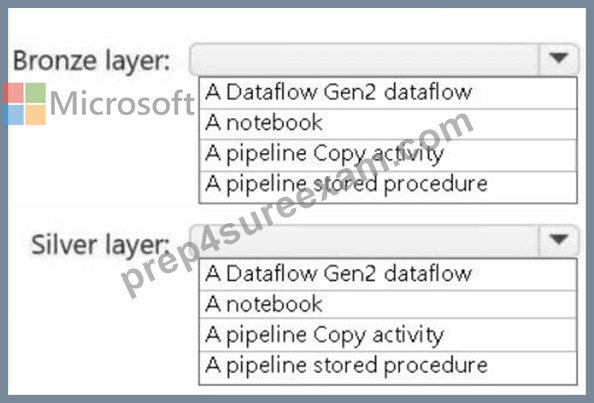
Answer:
Explanation: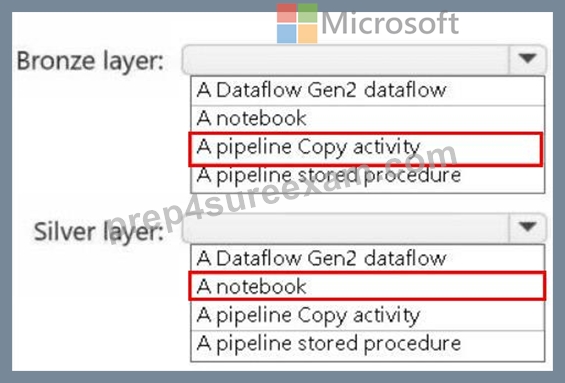
NEW QUESTION # 44
You have a Fabric .
In Warehouse1, you create a table named DimCustomer by running the following statement.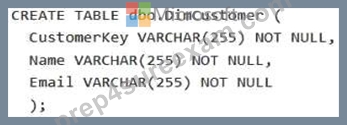
You need to set the Customerkey column as a primary key of the DimCustomer table.
Which three code segments should you run in sequence? To answer, move the appropriate code segments from the list of code segments to the answer area and arrange them in the correct order.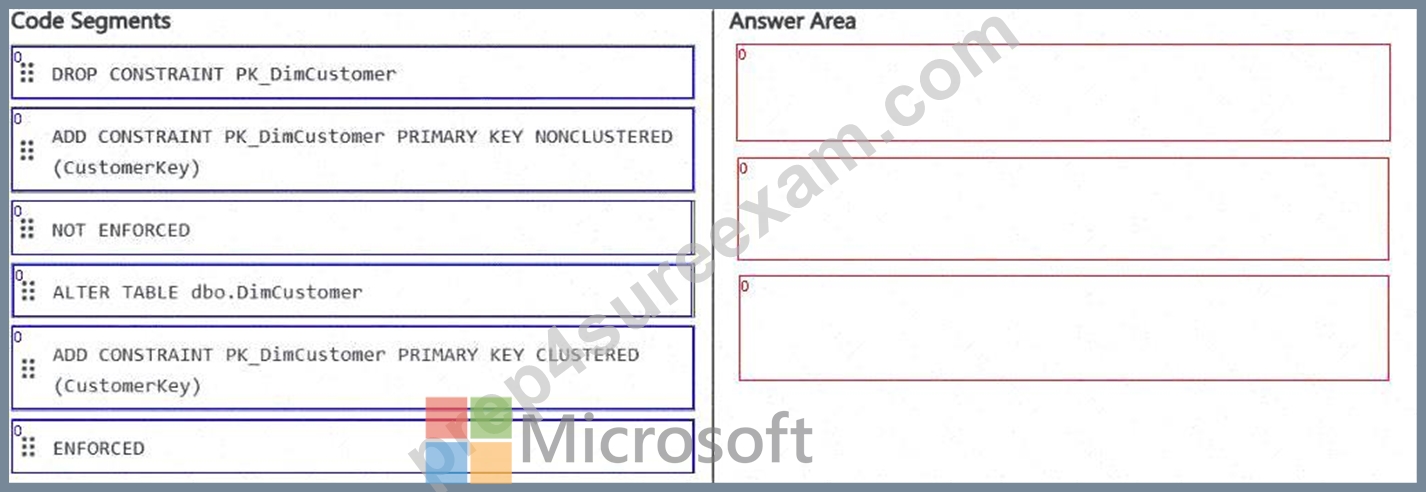
Answer:
Explanation: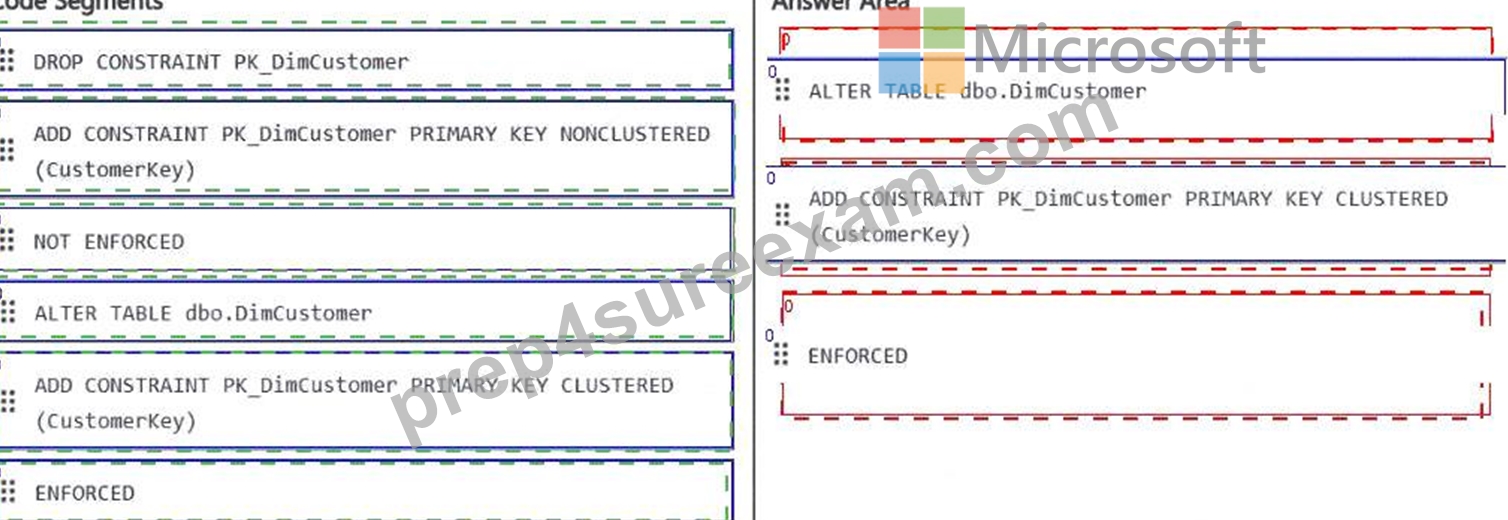
Explanation: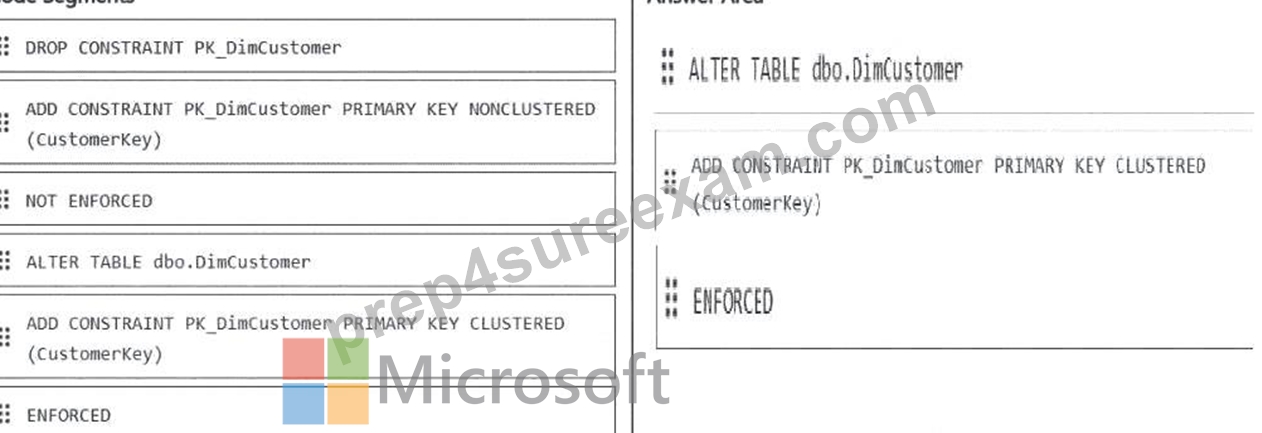
NEW QUESTION # 45
You need to develop an orchestration solution in fabric that will load each item one after the other. The solution must be scheduled to run every 15 minutes. Which type of item should you use?
- A. warehouse
- B. notebook
- C. Dataflow Gen2 dataflow
- D. data pipeline
Answer: D
NEW QUESTION # 46
You are building a data loading pattern by using a Fabric data pipeline. The source is an Azure SQL database that contains 25 tables. The destination is a lakehouse.
In a warehouse, you create a control table named Control.Object as shown in the exhibit. (Click the Exhibit tab.) You need to build a data pipeline that will support the dynamic ingestion of the tables listed in the control table by using a single execution.
Which three actions should you perform in sequence? To answer, move the appropriate actions from the list of actions to the answer area and arrange them in the correct order.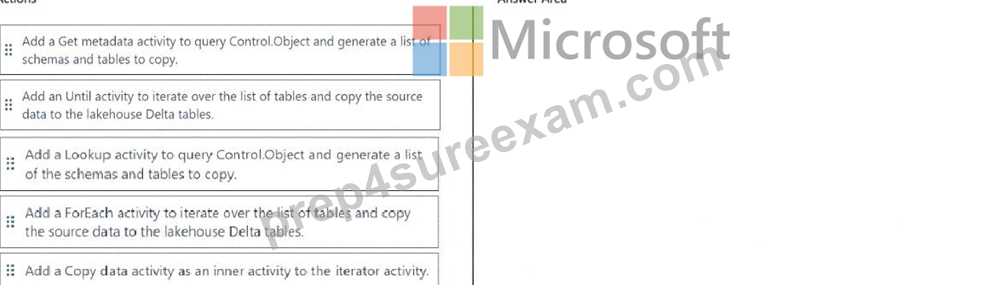
Answer:
Explanation: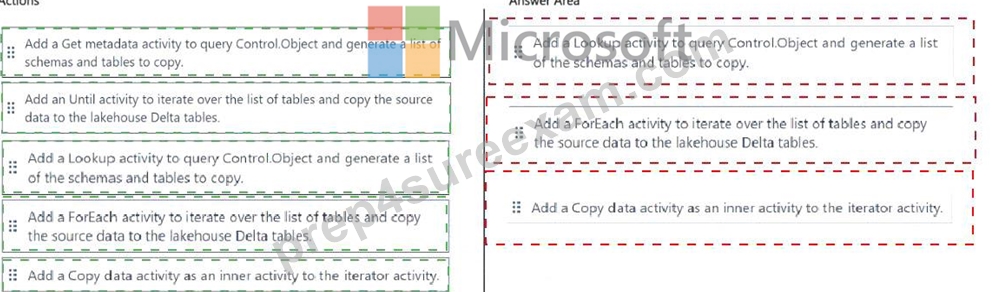
Explanation: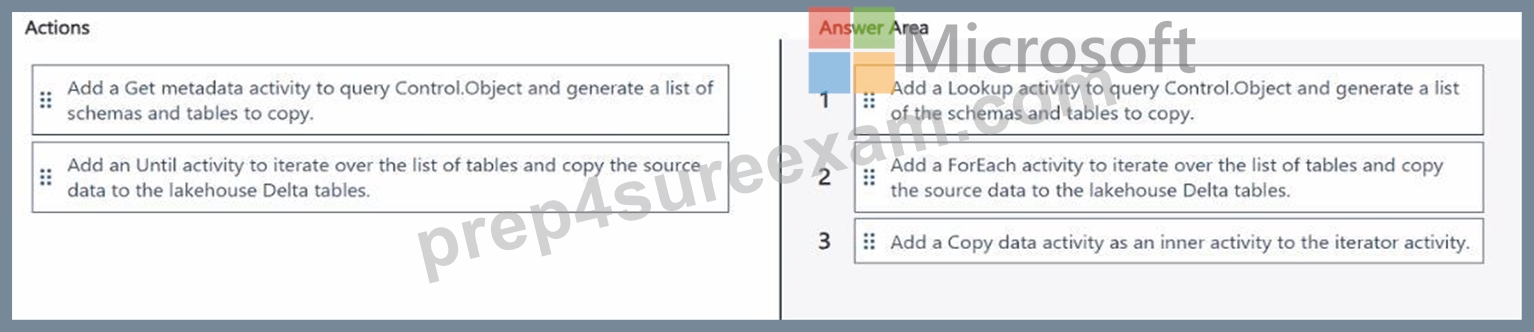
NEW QUESTION # 47
You have a Fabric workspace that contains a lakehouse named Lakehouse1. Data is ingested into Lakehouse1 as one flat table. The table contains the following columns.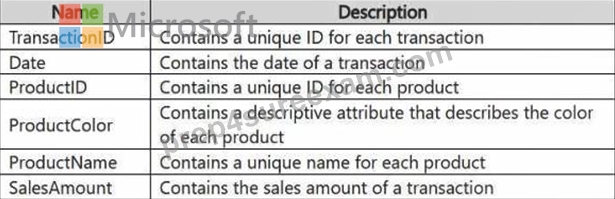
You plan to load the data into a dimensional model and implement a star schema. From the original flat table, you create two tables named FactSales and DimProduct. You will track changes in DimProduct.
You need to prepare the data.
Which three columns should you include in the DimProduct table? Each correct answer presents part of the solution.
NOTE: Each correct selection is worth one point.
- A. ProductID
- B. Date
- C. ProductColor
- D. TransactionID
- E. ProductName
- F. SalesAmount
Answer: A,C,E
Explanation:
In a star schema, the DimProduct table serves as a dimension table that contains descriptive attributes about products. It will provide context for the FactSales table, which contains transactional data. The following columns should be included in the DimProduct table:
ProductName: The ProductName is an important descriptive attribute of the product, which is needed for analysis and reporting in a dimensional model.
ProductColor: ProductColor is another descriptive attribute of the product. In a star schema, it makes sense to include attributes like color in the dimension table to help categorize products in the analysis.
ProductID: ProductID is the primary key for the DimProduct table, which will be used to join the FactSales table to the product dimension. It's essential for uniquely identifying each product in the model.
NEW QUESTION # 48
You have a Fabric workspace.
You have semi-structured data.
You need to read the data by using T-SQL, KQL, and Apache Spark. The data will only be written by using Spark.
What should you use to store the data?
- A. an eventhouse
- B. a warehouse
- C. a datamart
- D. a lakehouse
Answer: D
Explanation:
A lakehouse is the best option for storing semi-structured data when you need to read it using T-SQL, KQL, and Apache Spark. A lakehouse combines the flexibility of a data lake (which can handle semi-structured and unstructured data) with the performance features of a data warehouse. It allows data to be written using Apache Spark and can be queried using different technologies such as T-SQL (for SQL-based querying), KQL (Kusto Query Language for querying), and Apache Spark (for distributed processing). This solution is ideal when dealing with semi-structured data and requiring a versatile querying approach.
NEW QUESTION # 49
You are building a data orchestration pattern by using a Fabric data pipeline named Dynamic Data Copy as shown in the exhibit. (Click the Exhibit tab.)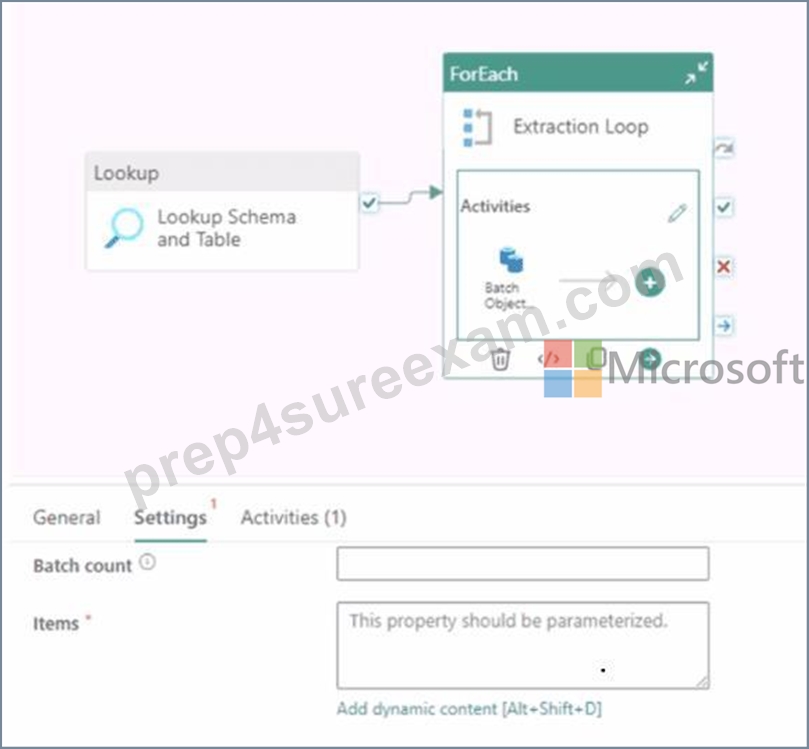
Dynamic Data Copy does NOT use parametrization.
You need to configure the ForEach activity to receive the list of tables to be copied.
How should you complete the pipeline expression? To answer, select the appropriate options in the answer area.
NOTE: Each correct selection is worth one point.
Answer:
Explanation:
Explanation:
NEW QUESTION # 50
You have a Fabric workspace that contains a data pipeline named Pipeline! as shown in the exhibit.
(Click the Exhibit tab.) What will occur the next time Pipelinel tuns?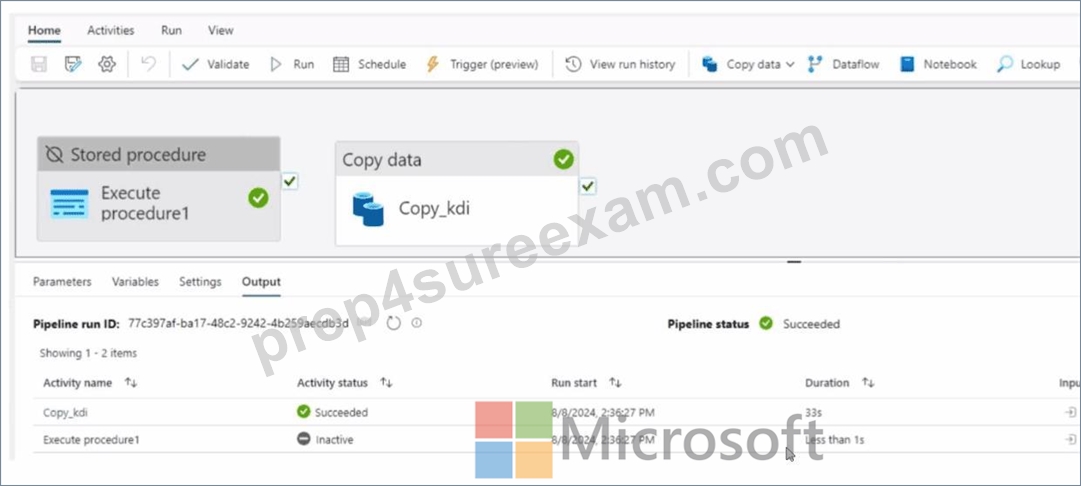
- A. Execute procedure1 will run first, and then Copy_kdi will run.
- B. Execute procedurel will run and Copy_kdi will be skipped.
- C. Copy.kdi will run first, and then Execute procedurel will run.
- D. Both activities will run simultaneously.
- E. Both activities will be skipped.
- F. Copy.kdi will run and Execute procedurel will be skipped.
Answer: E
NEW QUESTION # 51
You have five Fabric workspaces.
You are monitoring the execution of items by using Monitoring hub.
You need to identify in which workspace a specific item runs.
Which column should you view in Monitoring hub?
- A. Location
- B. Item type
- C. Job type
- D. Capacity
- E. Activity name
- F. Submitter
- G. Start time
Answer: A
Explanation:
To identify in which workspace a specific item runs in Monitoring hub, you should view the Location column. This column indicates the workspace where the item is executed. Since you have multiple workspaces and need to track the execution of items across them, the Location column will show you the exact workspace associated with each item or job execution.
NEW QUESTION # 52
You have a Fabric workspace that contains a lakehouse named Lakehouse1. Lakehouse1 contains a Delta table named Table1.
You analyze Table1 and discover that Table1 contains 2,000 Parquet files of 1 MB each.
You need to minimize how long it takes to query Table1.
What should you do?
- A. Run the OPTIMIZE and VACUUM commands.
- B. Disable V-Order and run the OPTIMIZE command.
- C. Disable V-Order and run the VACUUM command.
Answer: A
Explanation:
Problem Overview:
Table1 has 2,000 small Parquet files (1 MB each).
Query performance suffers when the table contains numerous small files because the query engine must process each file individually, leading to significant overhead.
Solution:
To improve performance, file compaction is necessary to reduce the number of small files and create larger, optimized files.
Commands and Their Roles:
OPTIMIZE Command:
- Compacts small Parquet files into larger files to improve query performance.
- It supports optional features like V-Order, which organizes data for efficient scanning.
VACUUM Command:
- Removes old, unreferenced data files and metadata from the Delta table.
- Running VACUUM after OPTIMIZE ensures unnecessary files are cleaned up, reducing storage overhead and improving performance.
NEW QUESTION # 53
Note: This question is part of a series of questions that present the same scenario. Each question in the series contains a unique solution that might meet the stated goals. Some question sets might have more than one correct solution, while others might not have a correct solution.
After you answer a question in this section, you will NOT be able to return to it. As a result, these questions will not appear in the review screen.
You have a Fabric eventstream that loads data into a table named Bike_Location in a KQL database. The table contains the following columns:
BikepointID
Street
Neighbourhood
No_Bikes
No_Empty_Docks
Timestamp
You need to apply transformation and filter logic to prepare the data for consumption. The solution must return data for a neighbourhood named Sands End when No_Bikes is at least 15. The results must be ordered by No_Bikes in ascending order.
Solution: You use the following code segment:
Does this meet the goal?
- A. no
- B. Yes
Answer: B
Explanation:
Filter Condition: It correctly filters rows where Neighbourhood is "Sands End" and No_Bikes is greater than or equal to 15.
Sorting: The sorting is explicitly done by No_Bikes in ascending order using sort by No_Bikes asc.
Projection: It projects the required columns (BikepointID, Street, Neighbourhood, No_Bikes, No_Empty_Docks, Timestamp), which minimizes the data returned for consumption.
NEW QUESTION # 54
HOTSPOT
You need to troubleshoot the ad-hoc query issue.
How should you complete the statement? To answer, select the appropriate options in the answer area.
NOTE: Each correct selection is worth one point.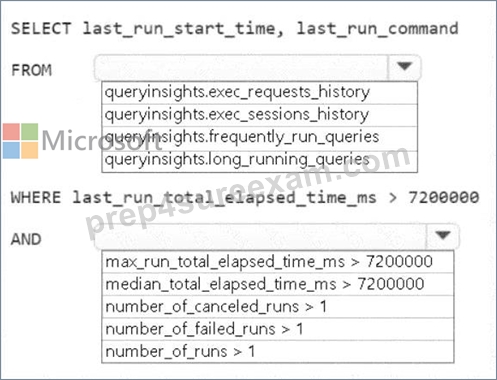
Answer:
Explanation: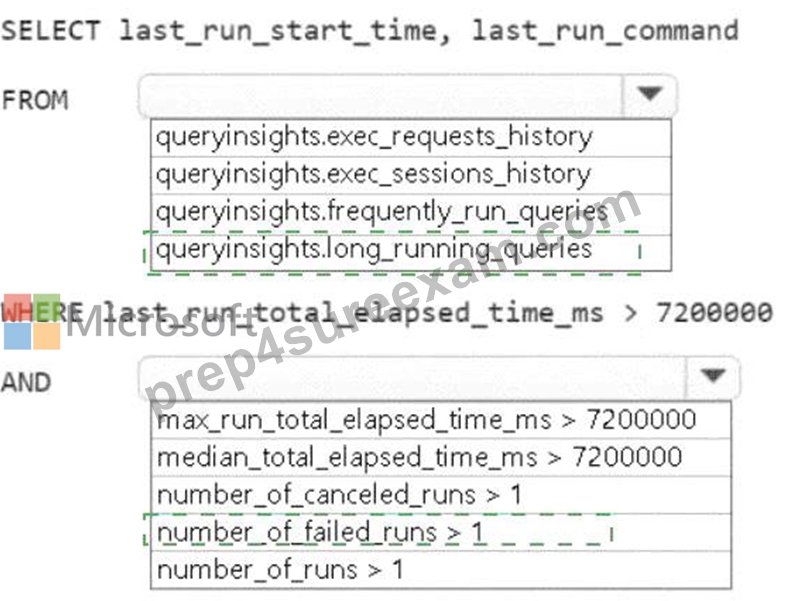
Explanation:
A screenshot of a computer Description automatically generated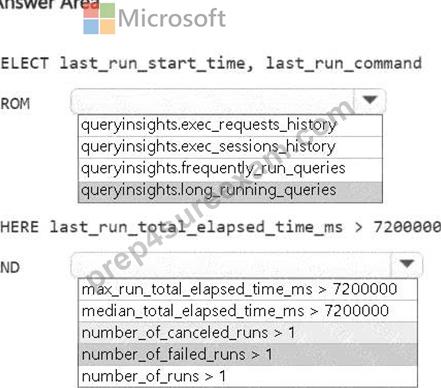
SELECT last_run_start_time, last_run_command: These fields will help identify the execution details of the long-running queries.
FROM queryinsights.long_running_queries: The correct solution is to check the long-running queries using the queryinsights.long_running_queries view, which provides insights into queries that take longer than expected to execute.
WHERE last_run_total_elapsed_time_ms > 7200000: This condition filters queries that took more than 2 hours to complete (7200000 milliseconds), which is relevant to the issue described.
AND number_of_failed_runs > 1: This condition is key for identifying queries that have failed more than once, helping to isolate the problematic queries that cause failures and need attention.
NEW QUESTION # 55
......
Passing Key To Getting DP-700 Certified Exam Engine PDF: https://lead2pass.prep4sureexam.com/DP-700-dumps-torrent.html